
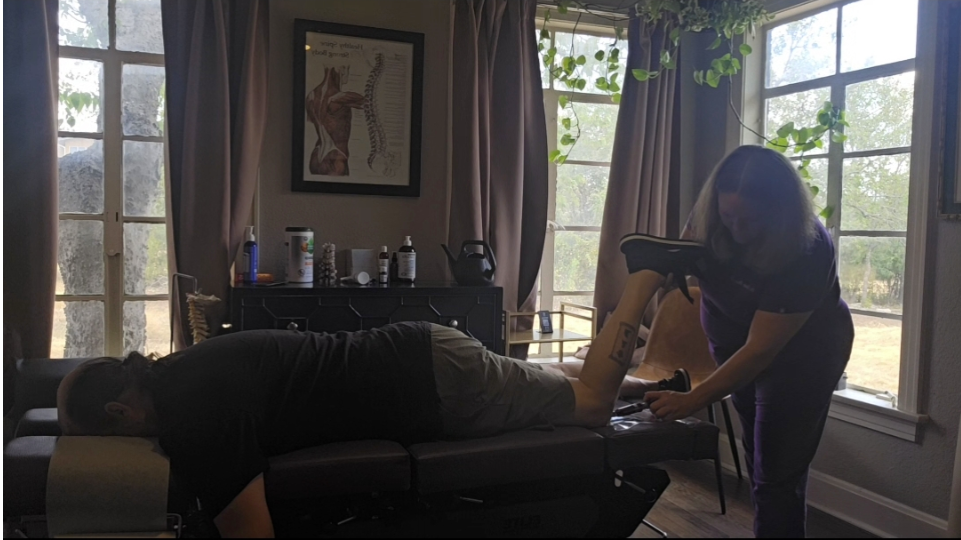
Knee pain can make everyday activities like walking, climbing stairs, exercising, or simply getting up and down more difficult. Whether your knee discomfort started after an injury, developed gradually from repetitive activity, or seems to have appeared without an obvious cause, understanding why the knee is not moving properly is an important part of creating an effective care plan.
At Austin Community Wellness, we take a whole-body approach to evaluating knee pain and movement. Rather than focusing exclusively on the painful area, we look at how the knee interacts with the foot, ankle, hip, pelvis, and surrounding muscles and joints.
For appropriate patients, the Activator Method® can be incorporated into care as a gentle, controlled approach to addressing joint dysfunction and movement restrictions.
Why Knee Assessment Is So Important
The knee is a complex joint that sits between the ankle and hip. Because of its position, it is influenced by movement and mechanics both above and below it.
For example, changes in foot or ankle mechanics can affect how the lower leg moves. Similarly, changes in hip or pelvic movement can alter the forces placed on the knee.
This means that the location of your pain isn’t necessarily the only area that needs to be evaluated.
A comprehensive assessment may include looking at:
- Range of motion
- Joint mobility
- Muscle balance and tension
- Foot and ankle mechanics
- Hip mobility
- Pelvic mechanics
- Gait and movement patterns
- Balance and stability
- How the knee responds to specific movements
- The history and mechanism of an injury
By looking at these factors together, we can develop a better understanding of the overall movement pattern.
Common Causes of Knee Pain
Knee discomfort can have many different causes. Some common examples include:
- Sports injuries
- Falls or accidents
- Repetitive-use injuries
- Muscle imbalances
- Changes in mobility
- Overuse from exercise
- Altered walking mechanics
- Joint stiffness
- Previous injuries
- Increased physical activity
Some knee conditions require medical evaluation, imaging, physical therapy, or other forms of treatment. Chiropractic care is not appropriate for every type of knee injury, which is why assessment is such an important first step.
Looking Beyond the Knee
One of the principles we emphasize at Austin Community Wellness is that the body works as a connected system.
The knee doesn’t function independently. Every time you walk, run, squat, or climb stairs, multiple joints and muscles work together to create movement.
Consider a simple walking pattern. The foot contacts the ground, the ankle moves, the lower leg rotates, the knee bends and straightens, and the hip and pelvis contribute to the movement. A restriction or altered movement pattern in one area can influence how another area functions.
This is why a knee assessment may involve evaluating areas such as the ankle, foot, hip, and pelvis, rather than simply focusing on the location of the pain.
What Is the Activator Method?
The Activator Method® is a chiropractic technique that uses a small handheld instrument to deliver a controlled, low-force impulse to a specific area.
Unlike traditional manual adjustments, the Activator instrument allows the practitioner to deliver a quick, targeted impulse without the twisting or rotational movement associated with some other chiropractic techniques.
Many patients appreciate this approach because it is gentle, precise, and controlled.
Activator care can be used as part of an overall chiropractic assessment and treatment plan when appropriate.
How Activator May Be Incorporated Into Knee Care
When appropriate, Activator adjustments may be used to address areas of joint dysfunction identified during an examination.
Depending on the individual assessment, care may involve evaluating and addressing movement in the:
- Knee
- Ankle
- Foot
- Hip
- Pelvis
- Spine
The goal is not simply to “push the knee back into place.” Instead, the purpose of the assessment is to understand how the joints are moving and determine whether specific areas may benefit from gentle chiropractic care.
Because every injury and patient is different, the appropriate technique and areas of care will vary.
Knee Pain After an Injury
If your knee pain began after a fall, sports injury, accident, or other trauma, it is especially important to understand what happened before beginning treatment.
A thorough history can help identify:
- When the injury occurred
- What caused the injury
- Whether swelling developed
- Whether movement became restricted
- Whether the knee feels unstable
- Whether symptoms have changed over time
- Whether you have experienced previous injuries
Significant swelling, inability to bear weight, deformity, locking, significant instability, or severe pain may require evaluation by an appropriate medical professional before chiropractic care is considered.
Athletes and Active Individuals
Knee problems can be particularly frustrating for athletes and active individuals because even relatively minor discomfort can interfere with training.
Whether you’re a runner, cyclist, weightlifter, recreational athlete, or simply someone who enjoys staying active, evaluating movement patterns can be an important part of maintaining healthy function.
An assessment can help identify areas of restricted mobility or altered movement that may be contributing to how you move.
The goal is to help you understand your body’s mechanics and determine whether chiropractic care may be an appropriate component of your overall wellness or recovery plan.
A Gentle Approach to Chiropractic Care
Not everyone wants a forceful chiropractic adjustment. For patients who prefer a gentler approach, the Activator Method can provide an alternative way to deliver a controlled chiropractic adjustment.
At Austin Community Wellness, we consider the individual’s needs, preferences, history, and examination findings when determining what techniques may be appropriate.
Our approach is centered around individualized care rather than a one-size-fits-all treatment plan.
When Should You Have Your Knee Evaluated?
Consider having your knee assessed if you are experiencing:
- Persistent knee discomfort
- Reduced range of motion
- Stiffness
- Difficulty with certain movements
- Discomfort during exercise
- Changes in your walking pattern
- Symptoms following an injury
- Recurrent knee problems
- Difficulty returning to normal activity
An assessment can help determine whether chiropractic care is appropriate or whether another type of healthcare provider would be better suited to evaluate your symptoms.
Knee Care in Austin, Texas
At Austin Community Wellness, we believe that good care starts with a good assessment.
Rather than automatically focusing on the painful area, we look at the body as a whole and consider how the feet, ankles, knees, hips, pelvis, and spine work together.
For appropriate patients, the Activator Method® offers a gentle and precise technique that can be incorporated into an individualized chiropractic care plan.
If you’re experiencing knee pain or recovering from a knee injury, we invite you to schedule an assessment and learn more about your options for care.
Austin Community Wellness
Austin, Texas
This information is for educational purposes and is not intended to diagnose or treat a specific medical condition. Knee injuries can have many causes. If you have significant pain, swelling, instability, inability to bear weight, or other concerning symptoms, seek appropriate medical evaluation.
Dr. Sarah Duke
4934 W US 290
Austin Tx 78735
O: (512)507-5672